Saffron Grades
A Complete Guide to Understanding Saffron Grades, Quality Standards, and Choosing the Right Grade for Your Business
Executive Summary
Not all saffron is created equal. Although every authentic saffron comes from the same flower (Crocus sativus L.), differences in harvesting, stigma separation, processing, and grading create several commercial categories with distinct characteristics, applications, and market values.
For importers, wholesalers, distributors, and private label buyers, understanding saffron grades is essential. Selecting the appropriate grade affects product positioning, customer satisfaction, manufacturing efficiency, and ultimately business profitability.
This guide explains how saffron is graded, what differentiates each grade, and how buyers can determine which type best suits their market requirements. It also introduces internationally recognized quality considerations and links to detailed guides covering each major saffron grade.
Estimated Reading Time
12–15 minutes
Intended Audience
This guide is designed for:
Prerequisite Knowledge
Before reading this guide, we recommend starting with:
What Is Saffron?
This foundational article explains the origin of saffron, how it is harvested, and why it is considered one of the world’s most valuable spices.
What You’ll Learn
After reading this guide, you will understand:
What saffron grades actually mean
How saffron grading is determined
The differences between major commercial grades
Which grade is suitable for different industries
Common misconceptions about saffron grading
How grading relates to international quality evaluation
Factors professional buyers should consider before purchasing bulk saffron.
What Are Saffron Grades?
Saffron grades are commercial classifications used to describe the physical characteristics of saffron stigmas after harvesting and processing. These classifications help buyers understand the appearance, composition, and intended application of each type before making a purchasing decision.
Contrary to a common misconception, saffron grades are not different plant varieties. Every commercial grade originates from the same saffron flower (Crocus sativus L.). The distinction lies in which parts of the stigma are included, how the saffron threads are separated, and how consistently they are processed and sorted.
Different countries and markets may use slightly different terminology, but the Iranian grading system has become one of the most widely recognized references in the international saffron trade due to Iran’s leading role in global saffron production and exports.
Understanding these grades enables buyers to compare products more accurately, communicate technical requirements with suppliers, and select the most appropriate saffron for retail, food manufacturing, foodservice, or private label applications.
Why Is Saffron Divided into Different Grades?
Although all authentic saffron comes from the same flower, not every harvested thread looks or performs the same. During harvesting and post-harvest processing, saffron stigmas can vary in length, shape, color uniformity, and the amount of yellow or white style attached to the red stigma. These differences have led to the development of commercial grading systems that make buying and selling saffron more consistent and transparent.
For professional buyers, saffron grading is more than a naming convention. It provides a practical way to specify product requirements, compare offers from different suppliers, and select the most suitable grade for a particular application.
The Purpose of Saffron Grading
A standardized grading system helps the global saffron trade by:
Creating a common language between suppliers and buyers
Simplifying quality comparison across different batches
Supporting consistent pricing based on product characteristics
Helping manufacturers select the most suitable raw material
Reducing misunderstandings during international transactions
For example, a retail brand seeking premium whole threads may prioritize appearance and thread uniformity, while a food manufacturer may focus more on coloring strength and production efficiency. Understanding saffron grades allows both buyers to make informed decisions based on their specific needs.
How Is Saffron Graded?
Commercial saffron grades are primarily determined by the physical structure of the harvested stigma, rather than by laboratory measurements alone. After harvesting, the red stigmas are carefully separated from the flower, dried under controlled conditions, and sorted according to established commercial criteria.
The most important grading factors include:
Amount of Red Stigma
The proportion of deep red stigma is one of the most significant grading criteria. Grades containing only the red portion are generally considered more premium than those that include larger sections of the yellow style.
Presence of Yellow or White Style
Some commercial grades intentionally retain part of the style attached to the stigma. While this does not necessarily indicate poor quality, it changes the appearance, market positioning, and intended use of the saffron.
Thread Length and Uniformity
Professional buyers often evaluate whether saffron threads are:
Uniformity is particularly important for premium retail packaging and private label products.
Appearance
Visual characteristics strongly influence commercial value. Buyers typically assess:
Appearance alone should never be used as the sole indicator of quality, but it remains an important commercial factor.
Harvesting and Processing Quality
Careful harvesting, hygienic handling, and controlled drying help preserve the natural properties of saffron and improve the consistency of each grade. Poor processing practices can negatively affect both appearance and product stability.
Commercial Grade vs. Laboratory Quality
One of the most common misconceptions in the saffron industry is that a commercial grade automatically reflects laboratory quality. In reality, these are two different evaluation systems.
Commercial grades describe the physical form of saffron, while laboratory analysis evaluates its chemical characteristics, such as coloring strength, aroma, and flavor compounds.
As a result, two batches classified under the same commercial grade may still differ in their laboratory test results depending on factors such as cultivation conditions, harvest timing, drying methods, and storage practices.
Professional buyers should therefore consider both commercial grading and laboratory testing when sourcing saffron for international markets, especially for premium retail brands and food manufacturing applications.
Why Different Markets Prefer Different Grades
There is no single “best” saffron grade for every business. The most suitable choice depends on the intended application, target customers, packaging strategy, and pricing objectives.
For example:
Premium retail brands often prefer visually attractive whole-thread grades.
Food manufacturers may prioritize consistency and production efficiency.
Restaurants and foodservice businesses often balance appearance with cost-effectiveness.
Private label companies typically select grades based on their target market positioning.
Choosing the right grade is therefore a commercial decision as much as a quality decision. Understanding these differences helps buyers purchase saffron that aligns with both customer expectations and business goals.
Main Commercial Saffron Grades
The international saffron market recognizes several commercial grades, each distinguished by the physical structure of the saffron threads after harvesting and processing. While all authentic saffron comes from the same flower (Crocus sativus L.), each grade offers different characteristics, visual appeal, and commercial advantages.
Understanding these grades enables buyers to select the most suitable product for retail, food manufacturing, foodservice, or private label applications.
Negin Saffron
Negin Saffron is one of the most recognized premium commercial grades in the international market. It consists of long, carefully separated red stigmas with little to no yellow style attached, giving it a distinctive appearance that is highly valued by importers and premium retailers.
Typical characteristics include:
Long, thick saffron threads
Predominantly deep red color
Minimal or no yellow style
Excellent visual presentation
Suitable for premium retail packaging and export markets
Because of its attractive appearance and consistency, Negin Saffron is widely used by companies targeting high-end consumers and specialty food retailers.
Learn more: Negin Saffron – Complete Guide
Super Negin Saffron
Super Negin Saffron represents a carefully selected category of exceptionally long and uniform saffron threads. Compared with standard Negin, this grade generally emphasizes greater thread length, improved consistency, and enhanced visual presentation.
It is commonly selected for:
Although the term “Super Negin” is widely used in the saffron trade, buyers should note that commercial definitions may vary slightly between suppliers. Clear product specifications are therefore essential during procurement.
Learn more: Super Negin Saffron – Complete Guide
Sargol Saffron
Sargol Saffron consists primarily of the red tips of the saffron stigma after complete removal of the yellow style. It is appreciated for its clean appearance and is one of the most commonly traded grades in both domestic and international markets.
Key characteristics include:
Sargol is often chosen by buyers seeking a balance between premium appearance, quality, and commercial value.
Learn more: Sargol Saffron – Complete Guide
Pushal Saffron
Pushal Saffron retains a small portion of the yellow style attached to the red stigma. This natural structure demonstrates that the saffron thread remains largely intact after harvesting.
Common characteristics include:
Red stigma with a visible yellow section
Longer natural thread structure
Lower processing compared with fully separated grades
Frequently used in retail and foodservice applications
Many international buyers appreciate Pushal Saffron because the intact thread structure can make visual authentication easier during inspection.
Learn more: Pushal Saffron – Complete Guide
Bunch Saffron
Bunch Saffron, sometimes referred to as Dasteh Saffron, consists of complete saffron threads that remain naturally bundled together after drying. Both the red stigma and the yellow style are preserved, creating the traditional appearance commonly associated with hand-tied saffron bundles.
Characteristics include:
Complete saffron threads
Traditional presentation
Minimal separation during processing
Preferred in certain regional markets
Suitable for buyers seeking whole-thread saffron in its traditional form
Although Bunch Saffron has a different appearance from premium separated grades, it remains an important commercial category in many export markets.
Learn more: Bunch Saffron – Complete Guide
Comparison of Major Saffron Grades
| Grade | Thread Appearance | Yellow Style | Typical Positioning | Common Applications |
|---|
| Negin | Long, thick, uniform | Minimal or none | Premium | Retail, export, private label |
| Super Negin | Extra-long, highly uniform | Minimal or none | Luxury | Premium brands, gift packaging |
| Sargol | Pure red threads | None | Premium / Mainstream | Retail, food production |
| Pushal | Red thread with attached style | Partial | Mid-range | Foodservice, retail |
| Bunch | Complete natural threads | Fully attached | Traditional | Regional markets, traditional trade |
Decision Matrix for Buyers
| Business Need | Recommended Grade | Why It Fits |
|---|
| Premium retail packaging | Super Negin | Exceptional appearance with long, uniform red threads that enhance shelf appeal. |
| High-end specialty stores | Negin | Premium presentation combined with excellent commercial versatility. |
| Private label brands | Negin or Sargol | Offers flexibility to balance product positioning, appearance, and pricing. |
| Food manufacturers | Sargol | Consistent quality and practical suitability for a wide range of food applications. |
| Restaurants & foodservice | Pushal | Good balance between appearance, authenticity, and commercial value. |
| Traditional markets | Bunch | Preferred in markets where traditional whole-thread presentation is valued. |
| Luxury gift products | Super Negin | Premium visual quality supports luxury branding and gifting. |
| Wholesale distribution | Multiple grades | Distributors often stock several grades to meet different customer requirements. |
Key Takeaway
There is no universally “best” saffron grade. The right choice depends on your customers, product positioning, budget, and intended application. Buyers who define their commercial requirements before sourcing are more likely to achieve consistent quality and long-term supply success.
Which Saffron Grade Is Best?
There is no universal “best” saffron grade. The optimal choice depends on your business objectives, customer expectations, product positioning, and target market.
For example:
A premium retail brand may prioritize thread length and visual consistency.
A private label company may focus on balancing appearance with pricing.
A food manufacturer may prioritize consistent performance across production batches.
A distributor may require several grades to meet the needs of different customer segments.
Professional sourcing therefore involves evaluating both commercial grading and product specifications rather than relying solely on the grade name.
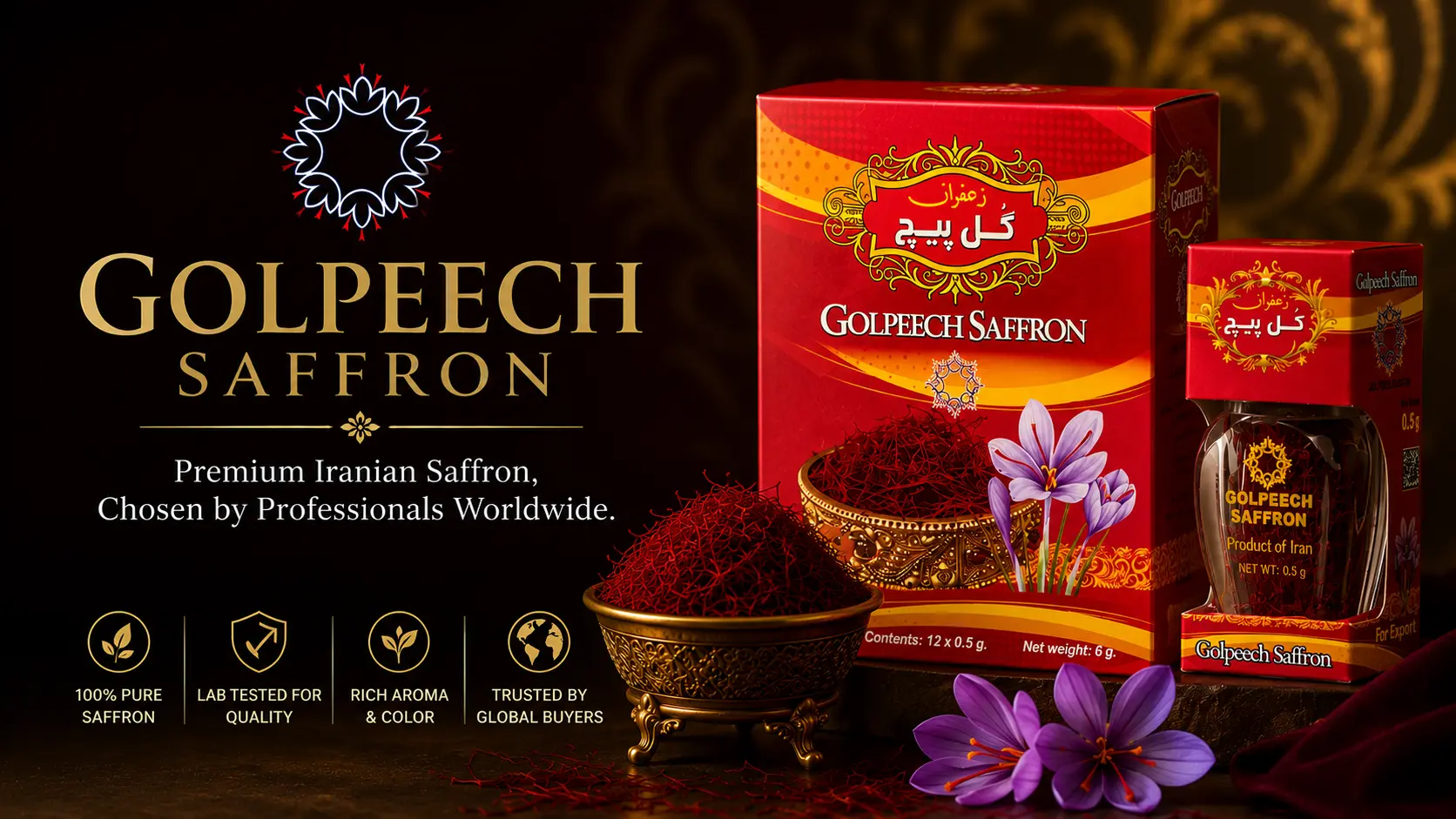
How Golpeech Supports Professional Buyers
At Golpeech, we understand that different businesses require different saffron grades. Rather than offering a one-size-fits-all solution, we work with importers, wholesalers, distributors, and private label partners to supply the grade that best matches their market requirements.
Our team provides guidance on commercial specifications, packaging options, and grade selection to help buyers make informed purchasing decisions while maintaining consistency across every shipment.
Buyer Checklist: Choosing the Right Saffron Grade