As global demand for premium saffron continues to grow across the food, beverage, pharmaceutical, and cosmetic industries, selecting the right wholesale supplier has become an essential part of building a stable supply chain. Beyond competitive pricing, professional buyers look for quality consistency, product authenticity, food safety standards, traceability, and dependable international logistics.
This guide explains how wholesale saffron works, what buyers should consider before placing a bulk order, and how to choose a supplier capable of supporting long-term business growth.
Unlike retail transactions, wholesale purchasing typically involves direct communication between buyers and suppliers to discuss product specifications, packaging requirements, documentation, quality standards, and shipping arrangements.
For companies operating in competitive markets, buying wholesale provides greater control over sourcing, inventory planning, and brand development.
Retail saffron is intended for individual consumers and is usually sold in small packages through supermarkets or online stores.
Wholesale saffron, on the other hand, is supplied in larger quantities for commercial distribution or industrial use. Wholesale buyers often require customized packaging, batch consistency, and comprehensive quality documentation before completing a purchase.
Each of these businesses has unique sourcing requirements, but they all share the need for reliable quality and dependable supply.
Its versatility makes saffron one of the most valuable natural ingredients in international trade.
Purchasing saffron in bulk is more than a way to secure larger quantities. For importers, distributors, and manufacturers, wholesale sourcing is a strategic decision that supports cost efficiency, supply chain stability, and long-term business growth. Working directly with an experienced supplier can also simplify procurement and improve product consistency across multiple shipments.
Buying saffron wholesale generally reduces the cost per unit compared to retail purchasing. While pricing depends on factors such as grade, harvest season, order volume, and packaging requirements, wholesale sourcing allows businesses to optimize purchasing budgets and improve profit margins.
Instead of placing frequent small orders, many companies consolidate their purchasing into larger shipments to reduce operational costs and improve inventory management.
Businesses cannot afford interruptions in supply, particularly when saffron is used as a key ingredient or sold under their own brand.
A dependable supply chain helps businesses meet customer demand without unexpected shortages.
Consistency is one of the most important factors in wholesale purchasing. Buyers expect every shipment to match agreed specifications in terms of appearance, aroma, color strength, cleanliness, and moisture level.
Reliable suppliers maintain standardized production and quality control procedures to minimize variation between batches, making it easier for distributors and manufacturers to maintain consistent product quality.
Wholesale suppliers often support a wide range of business requirements beyond simply delivering saffron.
These options allow businesses to build products that meet the expectations of their target markets while maintaining operational flexibility.
Wholesale buyers have different quality and pricing requirements depending on their market, customers, and product applications. Choosing the appropriate saffron grade is therefore an important part of the purchasing process.
Below is a brief overview of the most common commercial grades.
Super Negin is widely recognized as the highest commercial grade of saffron. It consists of long, thick, fully red stigmas with excellent visual appearance and high market value.
This grade is commonly selected by premium retailers, luxury food brands, and businesses serving high-end markets.
Negin saffron offers an excellent balance between appearance, quality, and commercial value. Its long red threads make it one of the most popular choices for international wholesale buyers.
Many distributors and importers consider Negin an ideal option for premium retail products.
Sargol consists entirely of red saffron stigmas without the yellow style. It delivers strong coloring performance and is widely used in food production, retail packaging, and food service applications.
Its popularity makes it one of the most frequently traded saffron grades worldwide.
Pushal saffron contains the red stigma together with a small portion of the yellow style. Although its appearance differs from premium grades, it remains an attractive choice for markets where value and authenticity are prioritized.
Many buyers select Pushal for large-scale distribution and traditional markets.
Note: Each saffron grade serves different commercial needs. A detailed comparison of grading standards, characteristics, and applications is available in our Saffron Grades & Types guide, allowing this article to remain focused on the wholesale purchasing process rather than grade classification.
How to Choose a Reliable Wholesale Saffron Supplier
Selecting a wholesale saffron supplier involves far more than comparing prices. A supplier becomes part of your supply chain, and their ability to deliver consistent quality, accurate documentation, and dependable service can directly affect your business reputation.
Professional buyers typically evaluate suppliers based on quality assurance, production capability, traceability, and long-term reliability rather than price alone.
Product Quality and Consistency
Quality should remain consistent across every shipment, regardless of order size or destination.
Before establishing a long-term partnership, buyers should evaluate:
Color and visual appearance
Aroma and freshness
Cleanliness
Moisture level
Uniformity between batches
Proper storage conditions
Consistency is particularly important for distributors, manufacturers, and brands that expect the same product quality throughout the year.
Food Safety and Quality Management
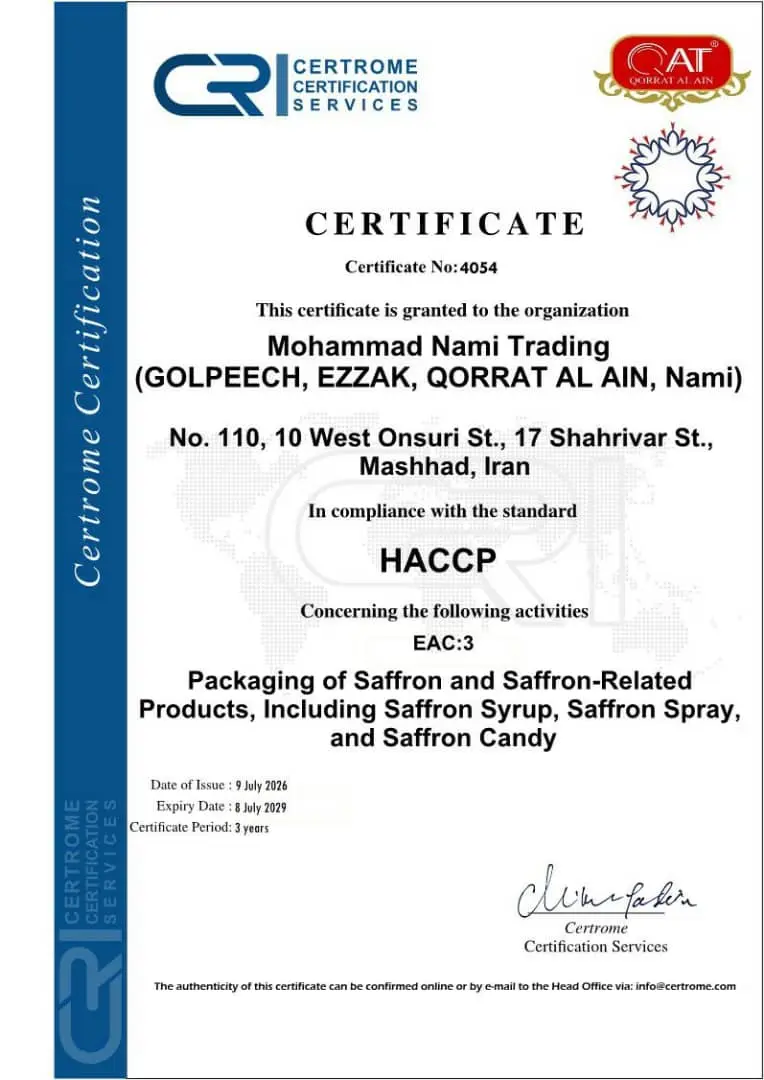
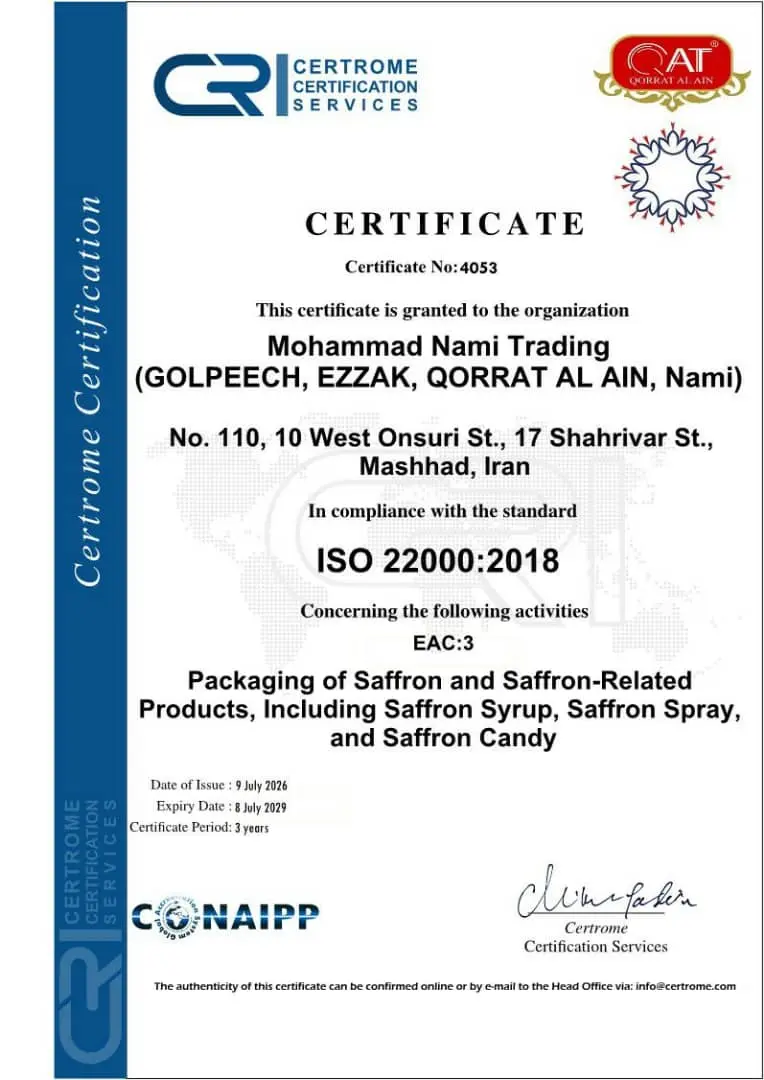
International buyers increasingly expect suppliers to operate under recognized food safety management systems.
A professional supplier should maintain documented procedures covering:
Raw material handling
Hygienic processing
Quality control
Packaging procedures
Product traceability
Storage management
These systems help reduce operational risks and improve confidence throughout the supply chain.
Laboratory Testing
Laboratory analysis provides objective information about saffron quality and authenticity.
Professional buyers often request laboratory reports covering characteristics such as:
Coloring strength
Aroma profile
Flavor compounds
Moisture content
Purity
Microbiological safety
Testing helps buyers verify that products meet agreed specifications before large commercial shipments are completed.
Learn more about international testing methods in our Saffron Laboratory Testing & ISO 3632 Guide.
Traceability
Traceability has become increasingly important in international food trade.
A reliable supplier should be able to identify:
Harvest season
Production batch
Processing records
Packaging history
Shipment documentation
Good traceability improves transparency and simplifies quality investigations if any issues arise after delivery.
Production Capacity
Businesses planning long-term cooperation need confidence that a supplier can handle increasing demand without compromising quality.
Important considerations include:
Annual production capacity
Inventory management
Seasonal availability
Ability to fulfill repeat orders
Manufacturing scalability
Choosing a supplier with sufficient production capability reduces the risk of supply interruptions during periods of high demand.
Export Experience
Exporting saffron requires more than producing a high-quality product.
Experienced exporters understand:
Working with an experienced export partner can simplify the purchasing process and reduce delays during international shipments.
Factors That Influence Wholesale Orders
Every wholesale order is unique. Requirements vary depending on the buyer’s market, distribution strategy, and intended application.
Several factors influence how wholesale orders are planned and fulfilled.
Order Volume
Commercial orders can range from small trial purchases to large recurring shipments.
The appropriate order size depends on:
Sales volume
Inventory strategy
Market demand
Production schedules
Many buyers begin with sample evaluations before committing to larger purchasing agreements.
Saffron Grade Selection
Different markets require different saffron grades.
For example:
Premium retail brands often prioritize visual appearance.
Food manufacturers may focus on performance and consistency.
Traditional markets may have different purchasing preferences.
Selecting the appropriate grade ensures the product aligns with customer expectations while supporting commercial objectives.
Packaging Requirements
Packaging should protect product quality throughout storage and transportation while meeting the needs of the destination market.
Wholesale buyers may require:
The most suitable solution depends on the customer’s distribution model and regulatory requirements.
Destination Market
Every export destination has its own commercial and regulatory considerations.
These may include:
Understanding destination-specific requirements before production begins helps avoid unnecessary delays and supports smoother international trade.
Common Challenges in Wholesale Saffron Purchasing
Buying saffron in bulk can create significant business opportunities, but it also presents challenges that require careful evaluation. Understanding these risks before selecting a supplier helps businesses make informed purchasing decisions and build more reliable supply chains.
Inconsistent Product Quality
One of the most common concerns in wholesale purchasing is receiving products that differ from previous shipments.
Variations in color, aroma, thread size, cleanliness, or moisture content can affect customer satisfaction and manufacturing consistency. For businesses that rely on repeat orders, maintaining uniform quality across multiple batches is essential.
Working with suppliers that follow standardized production and quality control procedures helps minimize these variations.
Adulteration Risks
Because saffron is one of the world’s most valuable spices, it is also vulnerable to adulteration.
Professional buyers should be cautious of products that may contain:
Requesting laboratory analysis and purchasing from reputable suppliers reduces the risk of receiving non-authentic products.
Supplier Reliability
A supplier should be evaluated not only by product quality but also by their ability to support long-term business relationships.
Consider factors such as:
Reliable suppliers help buyers avoid unnecessary disruptions and improve overall procurement efficiency.
Documentation and Compliance
International trade requires accurate documentation throughout the purchasing process.
Depending on the destination country, buyers may require documentation such as:
Preparing documentation correctly helps reduce customs delays and supports smoother international shipments.
The Wholesale Saffron Purchasing Process
Although every business has its own procurement procedures, wholesale saffron purchases generally follow a structured process that allows both buyer and supplier to confirm technical requirements before production and shipment.
Define Purchasing Requirements
The process begins with identifying business needs.
Typical specifications include:
Desired saffron grade
Expected order quantity
Target market
Packaging preferences
Delivery schedule
Clearly defining these requirements helps suppliers recommend the most suitable solution.
Request Product Information
After the initial inquiry, buyers usually request detailed product information, including technical specifications, available grades, packaging options, and relevant quality documentation.
This stage allows both parties to confirm whether the supplier can meet the project’s commercial and technical requirements.
Sample Evaluation
Many professional buyers evaluate product samples before placing large commercial orders.
A sample assessment may include:
Visual inspection
Aroma evaluation
Laboratory analysis
Packaging review
Internal product testing
Sample approval provides greater confidence before committing to larger purchase volumes.
Quotation and Order Confirmation
Once product specifications have been agreed upon, the supplier prepares a quotation based on the confirmed requirements.
The quotation generally reflects factors such as:
Product grade
Quantity
Packaging
Delivery terms
Shipping destination
After both parties agree on the commercial terms, the order can proceed to production.
Production and Quality Control
Before shipment, the saffron is processed, packed, and inspected according to the agreed specifications.
Quality control procedures may include:
Maintaining consistent quality throughout production is essential for long-term business relationships.
International Shipping
Once production and quality checks are complete, the shipment is prepared for export.
Depending on the destination and order size, transportation may be arranged by air or sea, with the necessary export documentation accompanying the shipment.
Careful logistics planning helps ensure that products arrive safely and on schedule.
Why Long-Term Supplier Relationships Matter
For wholesale buyers, selecting a supplier is not simply a one-time purchasing decision. Building a long-term partnership with an experienced supplier can improve operational efficiency, reduce procurement risks, and support sustainable business growth.
Over time, strong supplier relationships contribute to:
More consistent product quality
Better production planning
Improved communication
Greater flexibility for future orders
Increased confidence throughout the supply chain
Businesses that invest in reliable partnerships are often better positioned to respond to changing market demand while maintaining consistent standards for their customers.
Why Work with an Experienced Wholesale Saffron Supplier?
Choosing a wholesale saffron supplier is about more than completing a single transaction. For importers and distributors, the right supplier becomes a strategic partner who supports business continuity, product quality, and long-term growth.
An experienced supplier understands the expectations of international buyers and has established systems to deliver products consistently while adapting to changing market requirements.
Consistent Quality Across Every Shipment
Maintaining the same quality from one shipment to the next is one of the biggest challenges in the saffron trade.
Professional suppliers achieve consistency through:
Standardized processing procedures
Careful grading and sorting
Batch quality control
Controlled storage conditions
Regular production monitoring
Consistent quality helps distributors protect their reputation and maintain customer confidence.
Transparent Communication
International purchasing requires clear communication throughout every stage of the order.
A reliable supplier should provide timely updates regarding:
Product availability
Order status
Production schedules
Shipping arrangements
Required documentation
Transparent communication helps buyers plan inventory more effectively and reduces uncertainty throughout the procurement process.
Flexible Solutions for Different Markets
Wholesale customers often serve different industries and geographic markets, each with its own requirements.
An experienced supplier can support businesses by offering flexibility in:
Product grades
Packaging formats
Labeling requirements
Shipping options
Order quantities
This flexibility enables buyers to respond more effectively to changing customer needs and market conditions.
Commitment to Long-Term Partnerships
Successful wholesale relationships are built on trust rather than one-time transactions.
Professional suppliers focus on:
Consistent product performance
Reliable customer service
Continuous quality improvement
Business transparency
Long-term cooperation
Strong partnerships create greater stability for both buyers and suppliers while supporting sustainable business growth.
Frequently Asked Questions
What is saffron wholesale?
Saffron wholesale refers to purchasing saffron in commercial quantities directly from producers or exporters for resale, manufacturing, or distribution rather than personal consumption.
Who typically buys saffron wholesale?
Wholesale saffron is commonly purchased by importers, wholesalers, food manufacturers, retail brands, distributors, hospitality suppliers, and companies developing private label products.
What is the difference between wholesale and retail saffron?
Retail saffron is packaged for individual consumers in small quantities, while wholesale saffron is supplied in larger commercial volumes with greater flexibility in packaging, documentation, and logistics.
How do I choose a reliable wholesale saffron supplier?
Evaluate suppliers based on product consistency, quality management systems, laboratory testing, traceability, export experience, production capacity, and communication rather than price alone.
Can I request samples before placing a bulk order?
Yes. Sample evaluation is a common practice in international trade and allows buyers to assess quality, appearance, aroma, and suitability before committing to larger purchases.
Which saffron grade is best for wholesale?
The most suitable grade depends on your market and application. Premium retail brands often prefer higher visual grades, while manufacturers and distributors may select different grades based on product requirements and customer expectations.
What should I verify before importing saffron?
Buyers should verify product specifications, available documentation, quality reports, packaging requirements, shipping arrangements, and applicable import regulations for their destination market.
How is wholesale saffron packaged?
Wholesale saffron can be supplied in bulk packaging or prepared for retail distribution, depending on the buyer’s business model and market requirements.
Does wholesale saffron have a long shelf life?
When stored in a cool, dry place away from direct light and moisture, saffron can retain its quality for an extended period. Proper packaging and storage conditions are essential for preserving aroma, color, and flavor.
Why is supplier experience important in wholesale purchasing?
Experienced suppliers are generally better equipped to maintain consistent quality, manage production efficiently, prepare export documentation, and support long-term business relationships.
Conclusion
Wholesale saffron purchasing is a strategic investment that goes beyond securing large quantities of one of the world’s most valuable spices. Successful sourcing depends on selecting a supplier that can consistently deliver authentic products, maintain high quality standards, provide transparent documentation, and support reliable international logistics.
Whether you are an importer, distributor, food manufacturer, or private label brand, taking the time to evaluate suppliers carefully can reduce procurement risks and contribute to long-term business success.
If you are looking for a dependable wholesale saffron partner, focus on experience, consistency, quality assurance, and supply chain reliability. Building a long-term relationship with the right supplier creates lasting value for both your business and your customers.