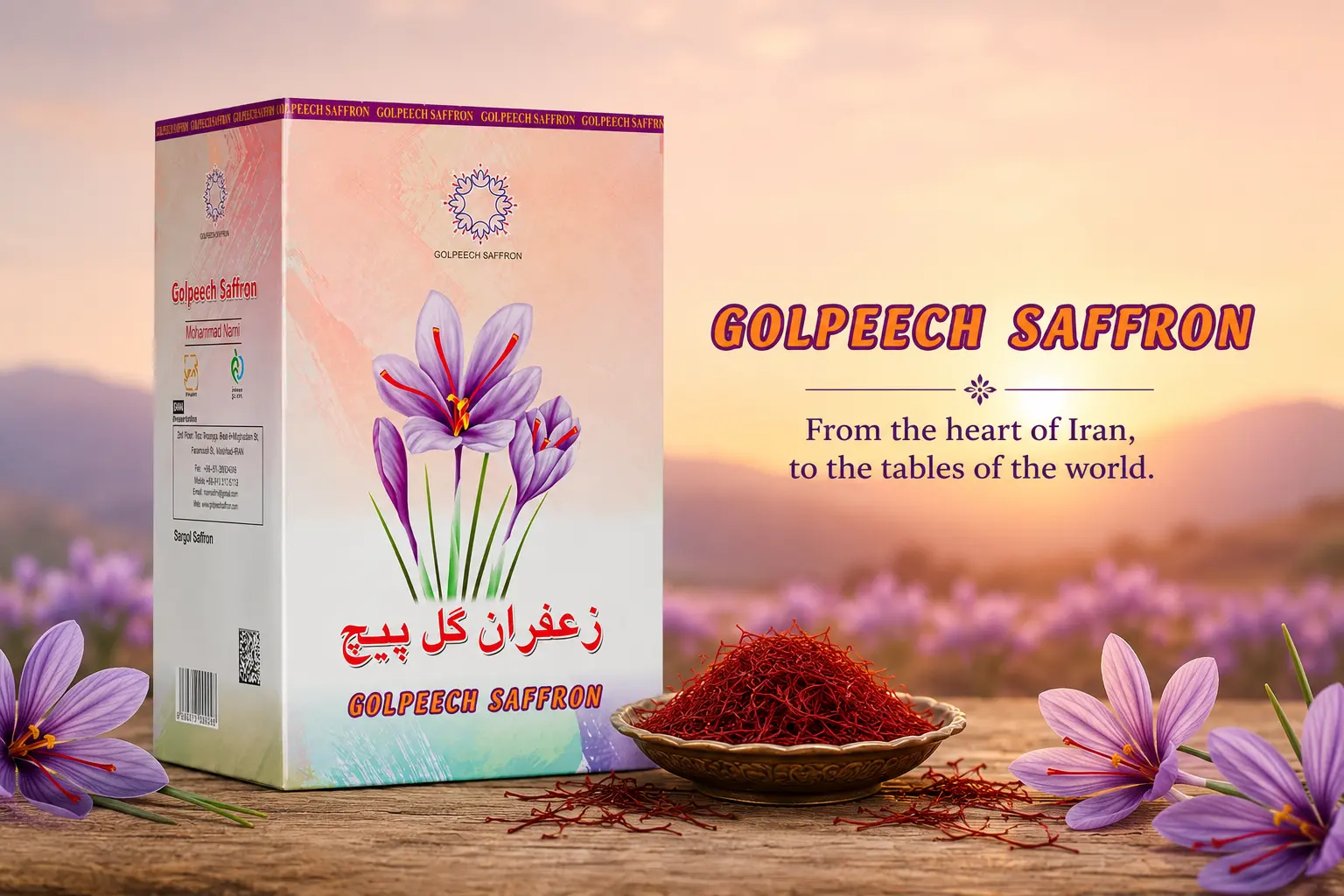
Iranian Saffron: The Complete Guide to the World’s Finest Saffron
Introduction
Iranian saffron is one of the most important products in the global saffron industry. Iran is the world’s leading saffron-producing country, accounting for more than 90% of global production according to the Food and Agriculture Organization of the United Nations (FAO). (FAOHome)
But Iran’s importance in the saffron market is not based on production volume alone. Iranian saffron is widely valued for its coloring strength, distinctive aroma, characteristic flavor, broad range of commercial grades, and the experience developed through generations of cultivation and processing.
For international B2B buyers, however, origin alone is not enough to determine saffron quality.
Importers, wholesalers, food manufacturers, distributors, and private-label brands need to evaluate several factors before purchasing, including:
This guide provides a practical overview of Iranian saffron from cultivation and harvesting to grading, quality evaluation, applications, packaging, and international sourcing.
If you are purchasing saffron commercially, this guide should help you understand what makes Iranian saffron valuable, how professional buyers evaluate it, and how to choose the right Iranian saffron supplier for your market.
What Is Iranian Saffron?
Iranian saffron is saffron produced from the flowers of Crocus sativus L. cultivated in Iran.
Each flower produces only three red stigmas, which are carefully harvested, separated, dried, graded, and prepared for domestic or international markets.
Because the production process remains highly labor-intensive, saffron is one of the world’s most valuable spices.
Iranian saffron is available in several commercial forms and grades, allowing buyers to select products according to their application, target market, quality requirements, and budget.
For international buyers, the term Iranian saffron therefore describes more than geographical origin. It represents a broad supply category that includes different grades, specifications, packaging formats, and commercial applications.
Why Is Iranian Saffron Considered a Premium Saffron?
The reputation of Iranian saffron is based on a combination of natural conditions, agricultural expertise, processing knowledge, and established commercial infrastructure.
Favorable Growing Conditions
Iran’s major saffron-producing regions have relatively dry climates, suitable soils, and seasonal temperature patterns that support saffron cultivation.
The northeastern provinces of Iran are particularly important to the country’s saffron industry.
Generations of Cultivation Experience
Saffron cultivation has been practiced in Iran for centuries.
Knowledge of planting, irrigation, harvesting, stigma separation, drying, and grading has been passed from generation to generation.
Strong Natural Characteristics
Premium Iranian saffron can provide strong:
Coloring performance
Aroma
Characteristic flavor
Visual appearance
These characteristics are influenced by cultivation, harvesting, drying, processing, and storage.
Skilled Manual Harvesting
Saffron flowers are delicate and the stigmas must be separated carefully.
Manual harvesting and processing remain important parts of Iranian saffron production and require considerable experience.
Established Supply Chain
Iran’s large production base has created an extensive ecosystem involving farmers, processors, laboratories, wholesalers, exporters, and packaging operations.
For international buyers, this established supply network can provide significant sourcing flexibility.
The History of Iranian Saffron
Saffron has a long history in Persian culture and agriculture.
For centuries, it has been used in food, traditional practices, perfumes, textiles, and cultural ceremonies. Its distinctive color and aroma also made it an important luxury commodity.
Iran’s geographical position contributed to the historical movement of saffron through regional trade routes connecting Asia, the Middle East, and Europe.
Over generations, Iranian growers developed practical expertise in cultivation and post-harvest processing. Although modern technology has transformed parts of the industry, many fundamental production practices remain rooted in traditional knowledge.
Today, the Iranian saffron industry combines this agricultural heritage with modern approaches to:
Quality control
Laboratory testing
Food safety
Packaging
Traceability
International logistics
This combination of traditional expertise and modern commercial practices is an important part of Iranian saffron’s position in global markets.
Where Is Iranian Saffron Grown?
Iranian saffron production is concentrated primarily in northeastern Iran.
The most important production areas include:
Khorasan Razavi
South Khorasan
North Khorasan
Khorasan Razavi is particularly important to the country’s saffron industry.
The region’s semi-arid climate and agricultural traditions provide suitable conditions for saffron cultivation.
FAO has also recognized the Qanat-based Saffron Farming System in Gonabad, Iran as a Globally Important Agricultural Heritage System (GIAHS), highlighting the agricultural and cultural importance of saffron production in the region. (FAOHome)
How Growing Conditions Influence Saffron
Several environmental and agricultural factors can influence the characteristics of saffron, including:
Temperature
Soil drainage
Irrigation
Altitude
Harvest timing
Drying conditions
However, geographical origin should not be treated as a substitute for quality testing.
For professional buyers, origin, laboratory results, processing quality, and supplier consistency should be evaluated together.
How Iranian Saffron Is Harvested and Processed
The quality of Iranian saffron begins in the field but is influenced by every stage of post-harvest processing.
Flower Harvesting
The saffron flowering season is relatively short, making harvesting a highly time-sensitive operation.
Flowers are collected carefully to minimize damage to the delicate stigmas.
Stigma Separation
Each flower contains three red stigmas.
After harvesting, the stigmas are separated from the flower by hand.
The method of separation influences the final commercial form and grade of the saffron.
Drying
Drying is one of the most important post-harvest stages.
The objective is to remove moisture while preserving the natural compounds responsible for saffron’s:
Poorly controlled drying can negatively affect the final product.
Cleaning and Sorting
After drying, saffron is cleaned and sorted to remove unwanted plant material and achieve greater uniformity.
Grading
The dried saffron is then classified according to its physical characteristics and commercial requirements.
For a detailed explanation of the major Iranian saffron grades, see our [Saffron Grades] guide.
Laboratory Testing
Professional exporters may test saffron before packaging to verify important quality parameters.
Modern saffron quality evaluation commonly considers compounds associated with:
Golpeech’s own specialized laboratory describes testing for moisture, crocin, safranal, and picrocrocin as part of its quality-control process. (golpeechsaffron)
Iranian Saffron Quality: What Should Buyers Look For?
For professional buyers, saffron quality cannot be determined simply by looking at the color of the threads.
Quality should be evaluated through a combination of physical inspection, laboratory analysis, processing controls, and supplier consistency.
The most important factors include:
Coloring Strength
Coloring strength is one of the most important commercial characteristics of saffron.
It reflects the concentration of natural pigments, particularly crocin, that contribute to saffron’s coloring performance.
For food manufacturers, stronger and more consistent coloring performance can influence both product formulation and production efficiency.
Related resource: [Saffron Quality]
Aroma
Saffron’s characteristic aroma is closely associated with volatile compounds including safranal.
Proper harvesting, drying, packaging, and storage all influence aroma preservation.
Flavor
Picrocrocin contributes significantly to saffron’s characteristic bitter taste.
A product’s sensory characteristics can provide useful information, but professional buyers should not rely on sensory evaluation alone.
Purity
Premium saffron should be free from unnecessary foreign materials, artificial coloring, and other adulterants.
Purity is particularly important for food manufacturers and international importers operating under strict food-safety requirements.
Moisture
Excessive moisture can negatively affect shelf life and product stability.
Appropriate drying and storage conditions are therefore essential.
Laboratory Verification
Laboratory analysis provides objective information that helps buyers compare saffron from different suppliers.
For a detailed explanation of professional testing and quality indicators, see [Saffron Quality Guide] and [ISO 3632 Saffron Standard].
Understanding ISO 3632 for Iranian Saffron
ISO 3632 is one of the most important international references for saffron quality evaluation.
However, buyers should understand that ISO 3632 is not a company certification.
The current ISO specification is ISO 3632-1:2025, published in July 2025. It specifies requirements for dried saffron obtained from the pistils of Crocus sativus L. and applies to filaments, cut filaments, and powder. (ISO)
The separate ISO 3632-2:2010 standard specifies test methods for dried saffron and remains current. (ISO)
This distinction is important for importers.
A supplier saying that its saffron is “ISO 3632 certified” may be using terminology that requires clarification. Buyers should instead ask for the relevant laboratory test results and specifications and confirm which standard and edition were used.
Read more: [ISO 3632 Saffron Standard]
Iranian Saffron Grades
Iranian saffron is sold in several commercial grades.
The main grades encountered by international buyers include:
| Grade | Main Characteristics | Typical Applications |
|---|
| Super Negin | Long, thick and highly uniform red stigmas | Premium retail and luxury markets |
| Negin | Long, uniform red stigmas | Export, wholesale and private label |
| Sargol | Red stigmas with no attached style | Wholesale and food applications |
| Pushal | Red stigmas with part of the style | Food service, retail and traditional markets |
| Bunch | Complete saffron threads tied together | Traditional and regional markets |
The commercial value of a grade depends not only on its appearance but also on quality specifications, laboratory results, market demand, and intended application.
For a detailed comparison of the different types, see the dedicated [Saffron Grades: Negin, Sargol, Super Negin, Pushal and Bunch] guide.
How to Choose the Right Iranian Saffron Grade
There is no single saffron grade that is best for every business.
The right choice depends on the application and target market.
Premium Retail
Luxury retail brands may prioritize:
Long threads
Uniform appearance
Strong red color
Premium presentation
Super Negin and Negin are commonly considered for this segment.
Food Manufacturing
Food manufacturers may prioritize:
Sargol and other specifications may therefore be suitable depending on the formulation.
Food Service
Restaurants, hotels, and catering businesses often require practical pack sizes and consistent quality rather than the highest visual grade.
Traditional Markets
Pushal and Bunch saffron can be suitable for markets where traditional appearance and presentation are important.
The best commercial decision is therefore not necessarily to purchase the most expensive grade, but to select the grade that delivers the right combination of quality, performance, and value for the intended market.
Applications of Iranian Saffron
Iranian saffron is used across a wide range of industries.
Food Manufacturing
Food remains the largest and most established application.
Iranian saffron is used in:
Rice products
Sauces
Confectionery
Bakery products
Dairy products
Ready meals
Gourmet foods
Beverage Products
Saffron can also be incorporated into:
Premium teas
Herbal infusions
Functional beverages
Syrups
Specialty drinks
Nutraceutical Products
Saffron and saffron-derived ingredients are used in some dietary and wellness products.
However, businesses operating in regulated markets should evaluate applicable regulatory requirements before making health-related product claims.
Cosmetics
Saffron is also used in selected cosmetic and personal-care formulations, particularly where premium botanical ingredients and luxury positioning are important.
Iranian Saffron for International B2B Markets
The international saffron market includes several different types of buyers.
These include:
Importers
Wholesalers
Distributors
Food manufacturers
Spice companies
Retail brands
Private-label businesses
Food-service companies
Each buyer may require a different combination of:
Grade
Quantity
Packaging
Documentation
Quality specifications
Delivery requirements
This is why professional suppliers need to provide more than a standard product.
They must be able to adapt their supply operation to different commercial requirements.
Bulk Iranian Saffron
Bulk saffron is particularly important for international importers and distributors.
Buying saffron in bulk can provide greater flexibility because the buyer may:
Repackage the product
Create a private-label brand
Supply multiple retail channels
Serve food manufacturers
Distribute across several markets
Bulk purchasing also makes quality consistency and packaging protection particularly important.
For a deeper discussion of bulk purchasing, grades, quality requirements, and supplier selection, see our [Bulk Saffron] guide.
Iranian Saffron Packaging for Export
Packaging is an essential part of maintaining saffron quality after processing.
Saffron can be affected by:
Light
Moisture
Oxygen
Heat
Contamination
Professional export packaging should therefore protect the product during storage and international transportation.
Depending on the buyer’s requirements, Iranian saffron can be supplied in:
For a detailed explanation of materials, pack sizes, export considerations, and private-label solutions, see [Saffron Packaging].
How to Choose a Reliable Iranian Saffron Supplier
Selecting an Iranian saffron supplier requires more than comparing price per kilogram.
International buyers should evaluate:
Quality Control
Ask how the supplier controls quality from raw material sourcing through final packaging.
Laboratory Testing
Request relevant laboratory reports and confirm that the results correspond to the actual batch being purchased.
Traceability
The supplier should be able to identify batches and provide appropriate product documentation.
Product Consistency
A reliable supplier should be able to maintain agreed specifications across multiple shipments.
Packaging Capability
For retail and private-label buyers, packaging flexibility can be as important as the saffron itself.
Export Experience
International trade involves documentation, logistics, customs procedures, and destination-market requirements.
Communication
Professional communication and responsive after-sales support are essential for long-term B2B relationships.
For a broader framework for evaluating suppliers, see [Saffron Supplier].
Iranian Saffron and International Quality Management
Professional saffron exporters increasingly operate with structured quality and food-safety systems.
For international buyers, this may include:
HACCP
ISO 22000
Batch traceability
Laboratory testing
Controlled storage
Packaging inspection
Export documentation
These systems do not replace product-specific laboratory analysis, but they can provide important evidence that the supplier has a structured approach to food safety and quality management.
Why Choose Golpeech for Iranian Saffron?
Golpeech is an Iranian saffron company with more than five decades of family experience in the saffron business and international export operations.
The company supplies Iranian saffron to international B2B buyers, including importers, distributors, wholesalers, food businesses, and private-label customers. Golpeech’s website states that its quality-control operation includes specialized laboratory testing and that its saffron is tested for parameters including moisture, crocin, safranal, and picrocrocin. (golpeechsaffron)
Golpeech also provides multiple saffron grades and packaging options for international markets, allowing buyers to select products according to their application and commercial requirements. Its dedicated grade guide covers Super Negin, Negin, Sargol, Pushal, Bunch, and Konj. (golpeechsaffron)
For businesses looking for a long-term Iranian saffron partner, the key advantages include:
Iranian origin
Long-term saffron industry experience
International B2B focus
Laboratory quality control
Multiple commercial grades
Bulk supply capability
Flexible packaging
Private-label solutions
Export experience
Learn more about [Golpeech Saffron Company].
Conclusion
Iranian saffron has become a global benchmark through a combination of natural growing conditions, generations of cultivation expertise, skilled harvesting, careful processing, and a well-established supply chain.
However, buying Iranian saffron successfully requires more than identifying the country of origin.
Professional buyers should evaluate:
Grade
Coloring strength
Aroma
Flavor
Purity
Moisture
Laboratory results
Packaging
Traceability
Supplier reliability
Iranian saffron offers a wide range of commercial possibilities, from premium retail and luxury food products to bulk ingredients, food manufacturing, private-label brands, and international distribution.
For buyers seeking long-term supply relationships, the most important question is therefore not simply “Is this Iranian saffron?”
It is:
“Does this Iranian saffron consistently meet the quality, documentation, packaging, and supply requirements of my market?”
That is where professional supplier selection becomes critical.
Looking for a Reliable Iranian Saffron Supplier?
If you are sourcing Iranian saffron for wholesale, food manufacturing, distribution, or private-label production, Golpeech can discuss your required grade, quality specifications, packaging format, and order volume.
[Contact the Golpeech Export Team] to discuss your sourcing requirements.
Frequently Asked Questions
Why is Iranian saffron considered one of the world’s finest?
Iran is the world’s largest saffron producer, and its saffron benefits from extensive cultivation experience, suitable growing conditions, skilled harvesting, and established processing and export infrastructure. FAO reports that Iran produces more than 90% of the world’s saffron. (FAOHome)
What makes Iranian saffron different from saffron from other countries?
All commercial saffron comes from Crocus sativus L., but growing conditions, cultivation practices, harvesting, drying, grading, storage, and quality management can influence the final product.
What is the highest grade of Iranian saffron?
Super Negin is generally positioned as one of the highest commercial grades because of its long, thick, and predominantly red stigmas. However, the appropriate grade depends on the buyer’s application and market requirements.
What are the main Iranian saffron grades?
The major commercial grades include Super Negin, Negin, Sargol, Pushal, and Bunch. Some markets also trade Konj, although it is not equivalent to the premium red-stigma grades.
How can buyers verify the quality of Iranian saffron?
Professional buyers should combine physical inspection with laboratory analysis, supplier documentation, batch information, and an evaluation of consistency across shipments.
What is ISO 3632?
ISO 3632 is an international standard framework for saffron specifications and testing. The current specification is ISO 3632-1:2025, while ISO 3632-2:2010 covers test methods. (ISO)
Is ISO 3632 a certification?
No. Buyers should distinguish between an ISO standard for saffron specifications/testing and management-system certifications held by companies.
What industries use Iranian saffron?
Iranian saffron is used in food manufacturing, beverages, food service, specialty retail, nutraceutical products, cosmetics, and other premium applications.
Can Iranian saffron be purchased in bulk?
Yes. Bulk Iranian saffron is widely supplied to importers, wholesalers, distributors, food manufacturers, and repacking companies.
Can Iranian saffron be supplied under a private label?
Yes. Professional exporters may provide customized packaging and labeling for private-label brands, depending on destination-market requirements and order specifications.
What packaging is available for Iranian saffron?
Depending on the supplier and market, options can include bulk packaging, food-service packs, glass containers, metal tins, retail packaging, and customized private-label formats.
How should Iranian saffron be stored?
Saffron should generally be protected from light, moisture, excessive heat, oxygen, and strong odors. Appropriate packaging and controlled storage help preserve its quality.
How should importers choose an Iranian saffron supplier?
Evaluate the supplier’s product quality, laboratory testing, traceability, consistency, packaging capabilities, export experience, documentation, and communication rather than comparing price alone.
Why choose Golpeech for Iranian saffron?
Golpeech combines Iranian saffron sourcing and production experience with laboratory quality control, multiple commercial grades, export-oriented packaging, and B2B supply capabilities. (golpeechsaffron)