Saffron Quality Guide: How to Evaluate Premium Saffron Like an Expert
Introduction
Saffron is one of the world’s most valuable spices, yet its quality can vary dramatically between producers, harvests, and suppliers. For importers, wholesalers, and food manufacturers, understanding saffron quality is essential for reducing purchasing risks and ensuring consistent product performance.
This guide explains the practical factors professionals use to evaluate saffron quality before making a purchasing decision. Rather than relying on appearance alone, experienced buyers consider multiple indicators—including color strength, aroma, freshness, purity, moisture level, and laboratory verification.
Whether you are sourcing saffron for retail, food production, or private label manufacturing, this guide will help you recognize the characteristics of premium saffron.
Why Saffron Quality Matters
Quality affects far more than visual appearance.
High-quality saffron provides:
- stronger coloring power
- richer aroma
- balanced flavor
- better extraction
- longer shelf life
- higher customer satisfaction
- improved manufacturing consistency
Poor-quality saffron may contain excess moisture, foreign materials, damaged stigmas, or aged threads that significantly reduce performance.
The Main Factors That Determine Saffron Quality
Professional buyers typically evaluate several characteristics together rather than relying on a single factor.
Color Strength
The vibrant red color of saffron comes from natural compounds responsible for its coloring ability.
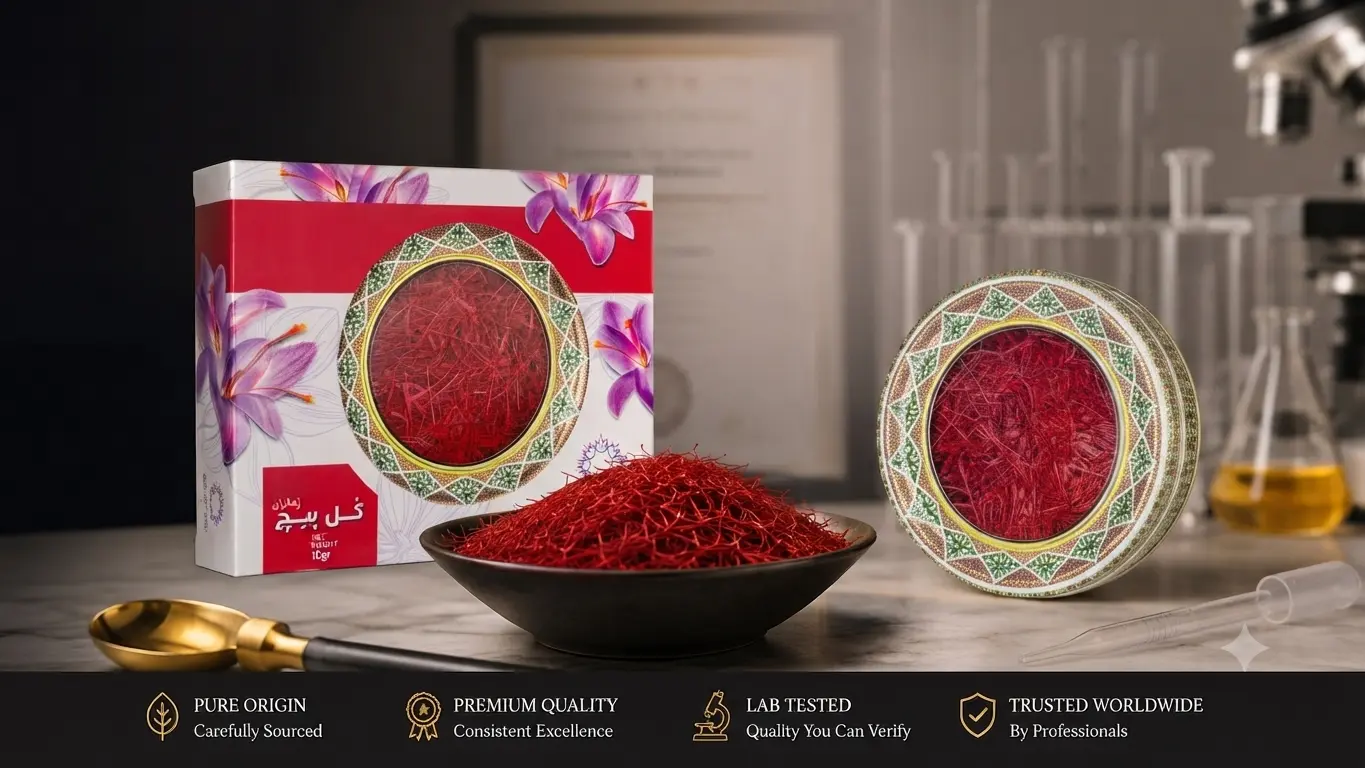
Premium saffron produces a rich golden color during infusion while maintaining deep crimson threads before brewing.
Bright but unnatural coloration may indicate artificial treatment or improper processing.
Aroma
Fresh saffron releases a complex fragrance often described as:
- floral
- honey-like
- earthy
- slightly metallic
A weak aroma may indicate old inventory or poor storage conditions.
Flavor
Quality saffron should have a distinctive bittersweet taste.
Sweet-tasting saffron is generally considered suspicious because genuine saffron naturally contains bitter compounds.
Purity
Premium saffron should consist of clean saffron stigmas without unnecessary plant material, dust, or foreign substances.
Professional suppliers implement strict cleaning and sorting procedures to maintain product purity.
Freshness
Freshly harvested saffron generally provides stronger aroma and coloring power than material stored for extended periods.
Freshness depends on:
- harvest season
- drying process
- packaging
- storage conditions
Moisture Content
Excess moisture can negatively affect shelf life and encourage quality deterioration.
Well-controlled moisture helps preserve aroma, color, and overall stability throughout transportation and storage.
Uniform Appearance
Consistent thread size, color, and cleanliness often indicate careful harvesting and processing.
Large variations within one batch may suggest inconsistent grading or mixing.
Visual Inspection Checklist
Before requesting laboratory documentation, buyers often begin with a visual inspection.
A quality batch generally shows:
| Indicator | What to Look For |
|---|
| Color | Deep crimson red |
| Cleanliness | Minimal foreign material |
| Uniformity | Similar thread size |
| Dryness | Crisp, not sticky |
| Aroma | Strong and natural |
| Packaging | Properly sealed |
Visual inspection provides useful information but should never replace laboratory analysis for commercial purchases.
Laboratory Verification
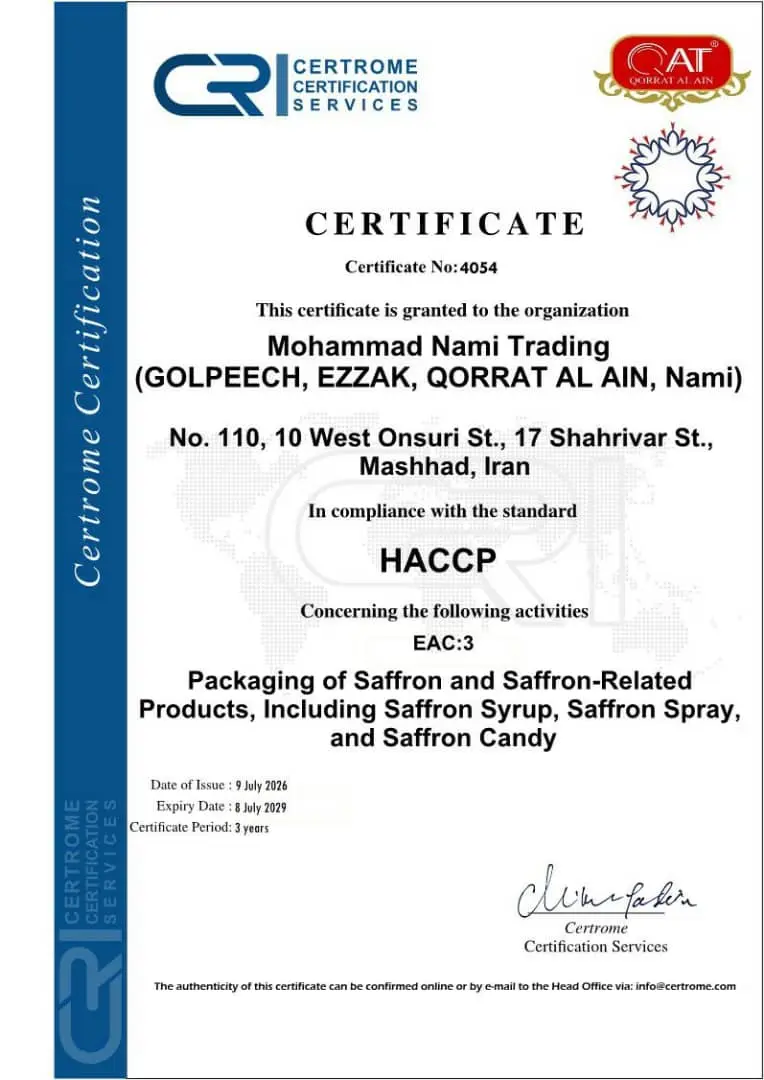
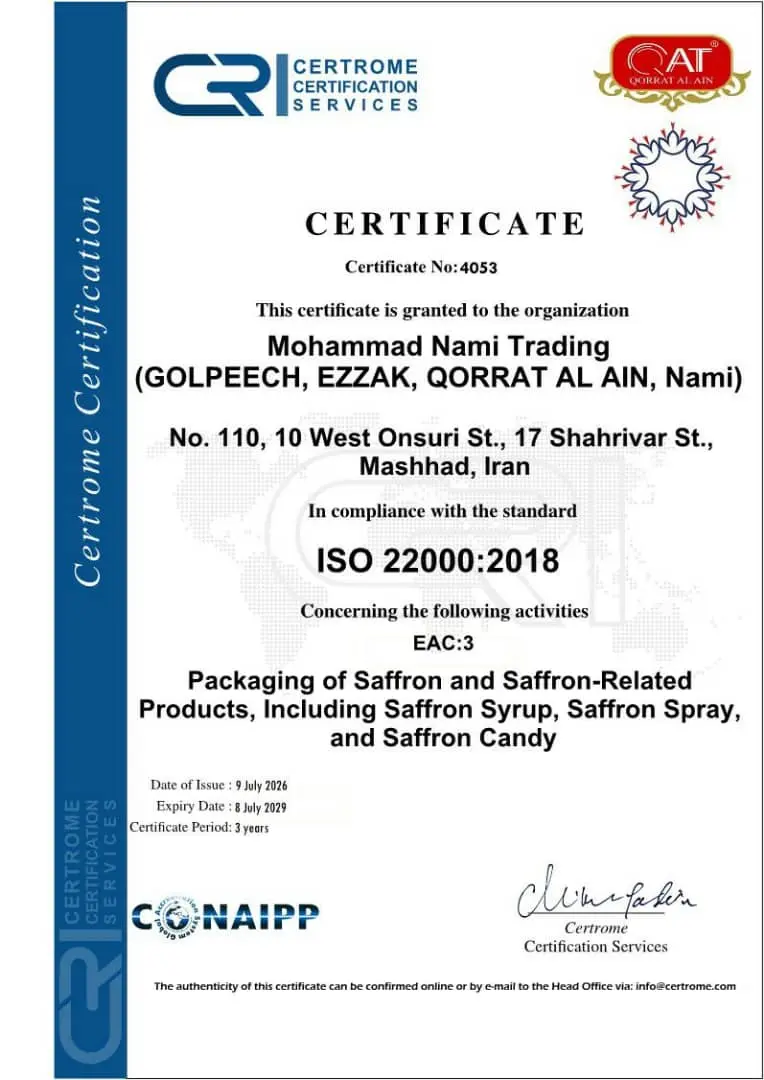
For international trade, laboratory testing provides objective measurements of saffron quality.
Independent analysis helps verify important quality parameters and supports purchasing confidence.
Detailed laboratory methods, testing procedures, and international quality classifications are covered in our dedicated article:
Laboratory Testing & ISO 3632
Choosing a Reliable Supplier
Even premium saffron requires a reliable supply chain.
Professional suppliers typically provide:
- traceable sourcing
- consistent production
- quality control procedures
- export documentation
- batch consistency
- responsive communication
Long-term supplier relationships often reduce purchasing risk more effectively than selecting suppliers based solely on price.
Common Mistakes When Evaluating Saffron
Many buyers focus on a single characteristic while overlooking other important quality indicators.
Common mistakes include:
- judging quality only by thread length
- assuming darker color always means higher quality
- relying solely on photographs
- ignoring freshness
- purchasing without documentation
- comparing products only by price
A comprehensive evaluation considers multiple quality factors together.
Final Thoughts
Evaluating saffron quality requires more than visual inspection. Professional buyers assess color, aroma, freshness, purity, moisture, consistency, and supplier reliability before making purchasing decisions.
Understanding these quality indicators helps businesses source saffron with greater confidence while reducing quality risks throughout the supply chain.
For large-volume purchases, combining physical inspection with laboratory verification and trusted supplier relationships provides the most reliable approach.
Internal Links
This article should naturally link to:
- What is Saffron?
- Saffron Grades & Types
- Laboratory Testing & ISO 3632
- Bulk Saffron Buying Guide
- Why Choose Golpeech
FAQ
How can I identify high-quality saffron?
Look for deep red stigmas, a strong natural aroma, low moisture, clean threads, and consistent appearance. For commercial purchases, laboratory verification provides additional assurance.
Does darker saffron always mean better quality?
No. Color alone cannot determine saffron quality. Aroma, freshness, purity, and laboratory analysis are also important.
Why is freshness important?
Fresh saffron generally offers stronger aroma, better coloring performance, and improved overall quality.
Should buyers request laboratory reports?
Yes. Laboratory reports help verify important quality parameters, especially for wholesale and international transactions.
Is visual inspection enough?
Visual inspection is useful as an initial assessment but should be combined with laboratory verification for commercial purchasing decisions.
What affects saffron quality the most?
Harvesting practices, drying methods, storage conditions, and quality control throughout the supply chain all play important roles.
Can packaging affect saffron quality?
Yes. Proper packaging protects saffron from moisture, light, and oxygen, helping preserve its aroma and color during storage.
Why do professional buyers evaluate multiple quality factors?
No single characteristic can accurately represent saffron quality. A comprehensive assessment provides a more reliable basis for purchasing decisions.