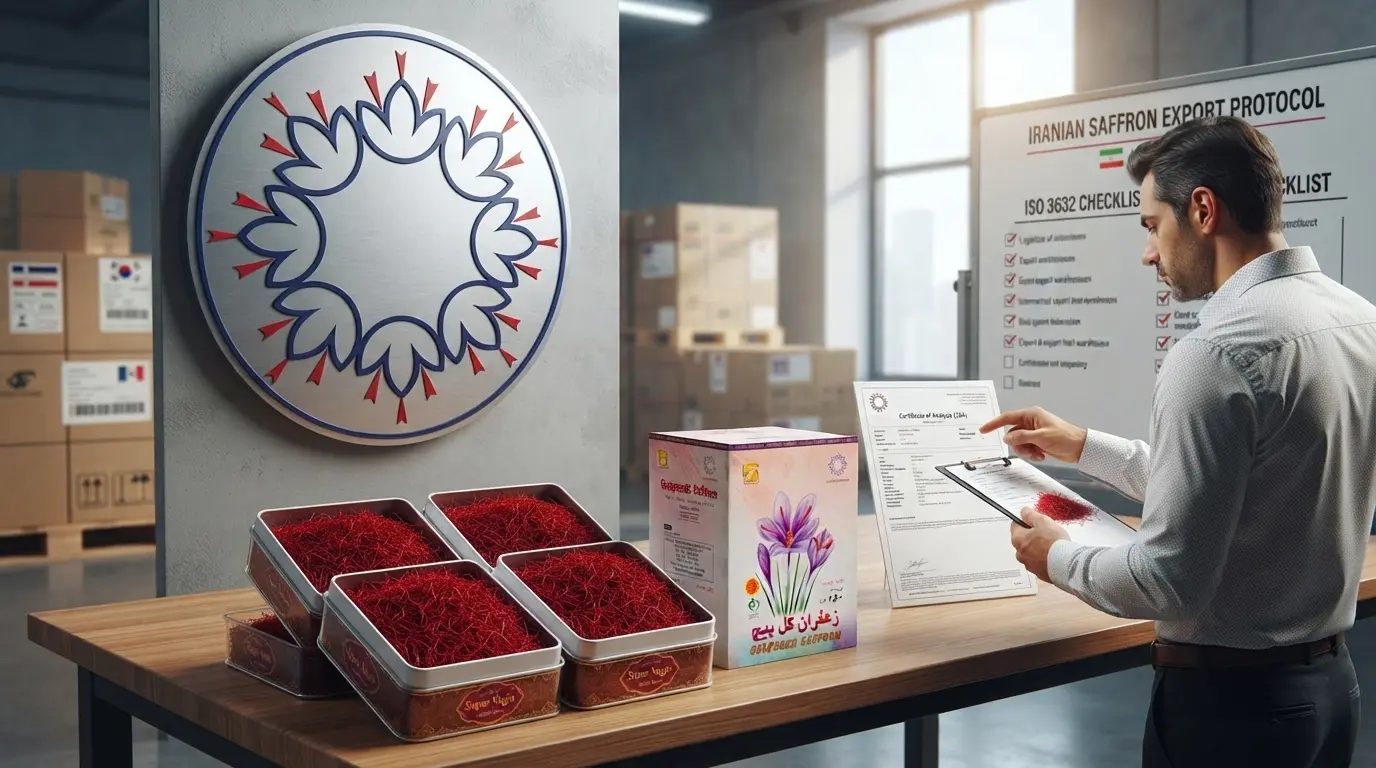
How to Buy Bulk Saffron: A Complete Guide for International Buyers
How to buy bulk saffron is an important question for international importers, wholesalers, food manufacturers, distributors, hospitality suppliers, and private-label brands.
Buying saffron in bulk is very different from purchasing a small retail package.
For an importer, wholesaler, food manufacturer, distributor, hospitality supplier, or private-label brand, a successful purchase involves much more than choosing a saffron grade and asking for the lowest price.
A professional bulk saffron purchase requires clear specifications, reliable quality, an appropriate commercial grade, representative samples, laboratory documentation, suitable packaging, export documents, and a supplier capable of maintaining consistent specifications across repeat orders.
This guide explains how international buyers can evaluate bulk saffron, compare suppliers, request quotations, and establish the right specifications before placing a commercial order.
Why Buying Bulk Saffron Requires a Different Approach
Saffron is a high-value spice, so relatively small differences in quality, moisture, grading, processing, packaging, and specification can significantly affect the value and performance of a shipment.
Two products may both be described as “premium saffron” while having different physical characteristics, commercial grades, laboratory results, and prices.
For this reason, professional buyers should not evaluate bulk saffron based only on:
Instead, the buyer should first define what product is actually required.
The objective is simple:
Buy the right saffron for the intended application, according to a clearly defined specification, from a supplier capable of delivering consistent quality at a commercially appropriate price.
Who Buys Saffron in Bulk?
Bulk saffron is purchased by businesses with different applications and purchasing requirements.
Importers
Importers may purchase saffron for distribution to retailers, wholesalers, food manufacturers, or other businesses in their domestic market.
Their priorities commonly include:
Competitive commercial terms
Consistent specifications
Reliable supply
Export documentation
Multiple grades
Flexible packaging options
Wholesalers and Distributors
Wholesalers and distributors may serve several customer segments at the same time.
They may require different grades or formats for:
Specialty retailers
Food-service customers
Restaurants and hotels
Food manufacturers
Private-label brands
Food Manufacturers
Food manufacturers generally need saffron that performs consistently in their production process.
Applications can include:
Confectionery
Bakery products
Dairy products
Beverages
Sauces
Ready meals
Spice blends
Gourmet foods
For these buyers, laboratory specifications and batch consistency may be more important than the visual appearance of individual threads.
Private-Label Brands
Private-label companies purchase saffron from a supplier and sell it under their own brand.
Their requirements may combine:
Hospitality and HORECA Suppliers
Hotels, restaurants, catering companies, and hospitality distributors generally look for an appropriate balance between:
Quality
Performance
Cost
Consistency
Supply continuity
The right specification therefore depends on the application rather than on a single definition of “best saffron.”
What Should You Decide Before Buying Bulk Saffron?
Before requesting quotations, define your requirements as clearly as possible.
At minimum, consider the following:
1. Intended Application
Determine how the saffron will be used:
The application influences the appropriate grade, format, packaging, and quality specification.
2. Product Form
Specify the form required:
Whole filaments
Cut filaments
Powder
Different applications may require different formats, and the product form should be clearly stated in the inquiry and purchase specification.
3. Commercial Grade
Do not simply ask for “high-quality saffron.”
Specify the commercial grade you are considering, such as:
Super Negin
Negin
Sargol
Pushal
Bunch
For a detailed comparison of Iranian commercial grades, see the Saffron Grades Guide.
However, one distinction is essential:
Commercial grade and laboratory quality are not the same thing.
Commercial Grade vs. Laboratory Quality
Commercial grades primarily describe the physical characteristics and appearance of saffron.
These characteristics can include:
Laboratory analysis evaluates measurable characteristics of saffron quality.
Depending on the applicable standard and specification, laboratory evaluation can involve parameters associated with:
ISO 3632 is the principal international standard used for the specification and testing of dried saffron. Buyers who need detailed information about laboratory evaluation should refer to the dedicated ISO 3632 Saffron Standard guide.
The key point for a buyer is:
A grade name should not replace a measurable product specification.
A product sold as Super Negin, for example, can still differ from another Super Negin product in laboratory characteristics, processing, moisture, purity, and overall commercial value.
What Quality Specifications Should You Request?
Before comparing quotations, establish the specifications that matter for your application.
Depending on the product and destination market, these may include:
Not every buyer needs the same specification.
A food manufacturer may prioritize measurable performance and consistency, while a premium retail brand may place greater emphasis on thread appearance and presentation.
For a broader explanation of saffron quality evaluation, see the Saffron Quality Guide.
Should You Request a Certificate of Analysis?
For professional bulk purchases, a Certificate of Analysis (COA) can be an important part of supplier and product evaluation.
The COA should relate to the relevant product or batch and report laboratory results against the agreed specification.
Depending on the application and destination market, buyers may request information relating to:
The exact documentation required varies according to the product, destination country, regulatory requirements, and buyer specification.
Therefore, documentation requirements should be discussed before the purchase agreement is finalized, not when the shipment is already ready to leave.
How to Define a Bulk Saffron Specification
One of the most effective ways to reduce confusion when sourcing saffron is to create a clear product specification before requesting prices.
A basic specification can include:
| Specification | Example |
|---|
| Product | Iranian saffron |
| Form | Whole filaments |
| Commercial grade | Negin |
| Quantity | 25 kg |
| Quality requirements | Agreed laboratory specification |
| Packaging | Bulk food-grade packaging |
| Destination | Buyer’s country |
| Documentation | COA + required export documents |
| Delivery terms | Agreed Incoterm |
The exact values will depend on the buyer’s application.
The important principle is consistency:
Ask different suppliers to quote against the same specification.
Only then can their offers be compared meaningfully.
How to Compare Bulk Saffron Suppliers
Price should be considered, but it should not be the first or only comparison criterion.
A practical supplier comparison can include:
| Evaluation Factor | What to Check |
|---|
| Origin | Declared country and production origin |
| Grade | Exact commercial grade |
| Quality | Agreed laboratory specifications |
| Batch consistency | Ability to maintain specifications |
| MOQ | Minimum order quantity |
| Packaging | Bulk, food-service, retail or customized |
| Documentation | COA and required export documents |
| Lead time | Production and delivery schedule |
| Payment terms | Agreed commercial conditions |
| Logistics | Shipping method and destination |
| Private label | Availability if required |
| Communication | Responsiveness and clarity |
| Supply capability | Ability to support repeat orders |
For a broader discussion of supplier evaluation, the dedicated Saffron Supplier Guide provides additional information.
Why Comparing Price Alone Can Be Misleading
Suppose two suppliers provide the following quotations:
Supplier A: $X/kg
Supplier B: $Y/kg
The lower quotation may initially appear more attractive.
But the two offers may differ in:
Grade
Laboratory specification
Moisture
Quantity
Packaging
Documentation
Incoterms
Delivery destination
Payment terms
In that situation, the two prices are not directly comparable.
The better question is:
Which supplier offers the best value for the exact specification I need?
For a professional buyer, the goal is not necessarily to find the lowest price.
The goal is to find the right combination of:
Quality + Specification + Consistency + Service + Commercial Value
What Is the MOQ for Bulk Saffron?
There is no universal minimum order quantity for all saffron suppliers.
MOQ can depend on:
A bulk food-service order may have different requirements from a private-label project requiring customized packaging.
Therefore, buyers should provide their intended order structure and ask the supplier for the applicable MOQ rather than assuming that one fixed quantity applies to every project.
Should You Request a Sample Before a Large Order?
For a new supplier relationship, a representative sample or trial order can reduce purchasing risk.
A practical process is:
Step 1 — Define the specification
Specify:
Grade
Form
Quality requirements
Quantity
Packaging
Destination
Step 2 — Request a representative sample
The sample should correspond as closely as possible to the product that will be supplied commercially.
Step 3 — Evaluate the sample
Consider:
Step 4 — Confirm the specification
Agree on the product specification before placing the commercial order.
Step 5 — Place the order
The purchase order should clearly identify the agreed product and relevant specifications.
For larger orders, this process is particularly useful because a photograph or general grade description cannot replace a representative physical sample.
How to Evaluate a Bulk Saffron Sample
A professional sample evaluation should consider more than visual appearance.
Visual Inspection
Check:
Aroma
The product should have the characteristic aroma of saffron without unusual, musty, rancid, or chemical odors.
Physical Condition
Look for signs of:
Excessive moisture
Poor handling
Broken threads
Foreign material
Inconsistent sorting
Laboratory Analysis
For significant commercial purchases, laboratory testing can provide objective information that visual inspection cannot.
The laboratory results should be evaluated against the agreed specification rather than against vague terms such as “premium.”
What Documents Should a Saffron Buyer Request?
Documentation requirements depend on the destination country, product, transaction, and applicable regulations.
Depending on the shipment, buyers may need documents such as:
The buyer should determine the destination-market requirements before the shipment is prepared.
Do not wait until the goods are ready to ship to discover that an important document is missing.
What Happens After You Place a Bulk Saffron Order?
Placing a purchase order is not the end of the buying process. After the order is confirmed, the agreed product specification, quantity, packaging, documentation, and delivery terms should remain the reference points throughout order preparation. Depending on the type of purchase, the supplier may then prepare the product, complete the required checks and documentation, prepare the shipment, and arrange delivery according to the agreed commercial terms.
For the buyer, the important principle is to maintain consistency between what was agreed and what is finally shipped. The final shipment should correspond to the approved specification and commercial order, while the required documents should be available according to the agreed requirements. Clear communication at this stage can help prevent misunderstandings concerning quantity, packaging, documentation, delivery arrangements, or other order details.
How to Request a Bulk Saffron Quotation
A vague inquiry such as:
“Please send your best price for saffron.”
usually produces a vague quotation.
A professional RFQ should give the supplier enough information to prepare a meaningful offer.
Example Bulk Saffron RFQ
Subject: Bulk Iranian Saffron Inquiry – [Grade] – [Quantity]
Dear Sales Team,
We are interested in purchasing bulk Iranian saffron for the [retail / food manufacturing / private-label / wholesale] market.
Please provide your quotation based on the following requirements:
Product: Iranian saffron
Grade: [Super Negin / Negin / Sargol / Pushal]
Form: [Whole filaments / Cut filaments / Powder]
Quantity: [XX kg]
Packaging: [Bulk / Customized]
Destination: [Country / Port]
Quality requirements: [Specify if applicable]
Documentation: COA and relevant export documents
Delivery terms: Please indicate available Incoterms
Lead time: Please advise
Payment terms: Please advise
Please also provide the relevant product specification and laboratory analysis available for the proposed product or batch.
Best regards,
[Name]
[Company]
How to Compare Bulk Saffron Quotations
Receiving several quotations is only the beginning of the purchasing process. Buyers should compare offers on the same commercial basis rather than looking only at the quoted price per kilogram. Check whether each quotation refers to the same grade, quantity, product form, packaging, destination, Incoterm, payment terms, documentation, and delivery schedule. If these conditions differ, the quoted prices cannot be compared directly.
A practical quotation comparison should therefore focus on the complete commercial offer. Before selecting an offer, confirm exactly what is included in the quoted price, which costs remain separate, how long the quotation is valid, and whether the supplier can provide the agreed specification under the proposed terms. This approach helps buyers identify the quotation that represents the most suitable overall commercial value rather than simply the lowest number.
What Questions Should You Ask a Saffron Supplier?
Before placing a significant order, consider asking:
Product
What exact commercial grade is being offered?
Is the saffron whole filament, cut filament, or powder?
What is the declared origin?
What product specification does the offered saffron meet?
Quality
Is a COA available?
Which laboratory parameters are tested?
Can you provide a representative sample?
How is batch consistency controlled?
Supply
What quantity can you supply regularly?
What is the expected lead time?
Can you support repeat orders?
Can the same agreed specification be maintained across future shipments?
Packaging
What bulk packaging options are available?
Can customized retail packaging be supplied?
Which packaging is recommended for the intended transportation and storage conditions?
Export
Which export documents can you provide?
Which Incoterms are available?
Can you arrange shipment to the required destination?
These questions help turn a simple price inquiry into a professional sourcing process.
How to Choose the Right Saffron Grade for Your Application
There is no universal “best saffron grade” for every buyer.
The appropriate grade depends on the application, target market, required appearance, technical specification, and budget.
Premium Retail
Typical priorities:
Super Negin or Negin may be appropriate depending on the required specification.
Food Manufacturing
Typical priorities:
Sargol or another specification-based product may be appropriate depending on the manufacturing process.
Hospitality and Food Service
Typical priorities:
Reliable performance
Consistent supply
Cost efficiency
Sargol or Pushal may be suitable for some applications.
Private Label
Typical priorities:
Brand positioning
Appearance
Quality consistency
Packaging
Competitive landed cost
Negin, Super Negin, Sargol, Pushal, or another specification can be considered depending on the target market.
For a detailed comparison of grades and their commercial applications, see the Saffron Grades Guide.
What Determines Bulk Saffron Price?
Bulk saffron should not be evaluated using a single “price per kilogram” benchmark.
The quotation can be influenced by factors such as:
This is why a meaningful price comparison requires a clearly defined specification.
The same grade name can represent commercially different products if other specifications are not agreed.
Why Packaging Matters in Bulk Saffron
Packaging is part of the product specification, not simply a presentation decision.
Saffron should be protected against conditions that can negatively affect its quality during storage and transportation, including:
Moisture
Light
Oxygen
Contamination
Physical damage
The appropriate packaging depends on:
Quantity
Product form
Transportation method
Storage conditions
Destination climate
Intended application
Retail requirements
Bulk industrial packaging may be very different from premium retail or private-label packaging.
For detailed information, see the dedicated Saffron Packaging Guide.
How to Avoid Common Problems When Buying Bulk Saffron
1. Choosing the Lowest Price Without Comparing Specifications
Always determine what is included in the quotation.
Compare:
Grade
Quality
Quantity
Packaging
Documentation
Delivery terms
2. Accepting Vague Quality Claims
Terms such as:
Premium
Super Premium
A+
Extra Quality
should not replace a defined product specification.
3. Ordering Without a Representative Sample
Whenever practical, evaluate a representative sample before committing to a large commercial order.
4. Defining the Product Only by Grade
A purchase order should not rely only on a term such as “Negin saffron.”
The relevant product characteristics and agreed quality requirements should also be defined.
5. Ignoring Future Supply
An excellent first shipment does not automatically guarantee consistent future shipments.
If the product will be sold under a brand or used in ongoing manufacturing, discuss:
batch consistency + repeat supply + specification control
before starting the relationship.
6. Discussing Documentation Too Late
Confirm documentation requirements before finalizing the commercial agreement and shipment plan.
A Practical Bulk Saffron Buying Checklist
Before confirming a purchase, make sure you have defined:
Product
Exact commercial grade
Product form
Declared origin
Intended application
Required quantity
Quality
Product specification
Laboratory requirements
COA requirements
Representative sample
Batch identification
Supplier
Packaging
Commercial Terms
Quotation basis
MOQ
Payment terms
Lead time
Incoterms
Destination
Documentation
The 7-Step Bulk Saffron Buying Process
For most international buyers, the sourcing process can be simplified into seven steps:
1. Define Your Application
Determine how the saffron will be used and who the final customer will be.
↓
2. Define the Product Specification
Specify the form, commercial grade, quality requirements, quantity, and packaging.
↓
3. Identify and Compare Suitable Suppliers
Evaluate suppliers against the same specification rather than comparing price alone.
↓
4. Request a Representative Sample
Evaluate the product before committing to a significant commercial order.
↓
5. Confirm Quality and Documentation
Review the relevant laboratory results, COA, product specification, and export documentation.
↓
6. Agree on Commercial and Logistics Terms
Confirm:
Price
Quantity
Packaging
Payment terms
Incoterms
Lead time
Destination
↓
7. Place the Order With a Clearly Defined Specification
The final purchase documentation should clearly identify the agreed product and requirements.
This process makes supplier comparison more objective and reduces avoidable purchasing risks.
Why Supplier Selection Matters as Much as Product Selection
Choosing a good saffron product is only one part of successful sourcing.
For an ongoing B2B relationship, the supplier must also be able to support:
This is particularly important for:
Importers who distribute the product to multiple customers.
Food manufacturers who need predictable product performance.
Retail and private-label brands that need consistency from one shipment to the next.
For these buyers, the supplier should be evaluated as a long-term supply partner, not simply as the source of the lowest initial quotation.
Why Source Bulk Iranian Saffron?
Iran is one of the world’s major saffron-producing countries and has a long-established cultivation, processing, and export industry.
For international buyers, Iranian saffron offers access to:
Multiple commercial grades
Different product forms
Bulk supply
Private-label solutions
Export packaging
Established production expertise
Experience serving international markets
However, country of origin alone should not determine the purchase decision.
The buyer should still evaluate the individual supplier’s:
For a broader understanding of Iranian saffron, production, grades, quality, applications, and international supply, see the Iranian Saffron Guide.
How to Manage Repeat Bulk Saffron Orders
For recurring purchases, buyers can make future orders more efficient by keeping a clear reference for the previously approved product. Instead of redefining every requirement from the beginning, the buyer and supplier can use the agreed product specification, reference sample, packaging requirements, documentation requirements, and other confirmed commercial conditions as the basis for subsequent orders.
This is particularly useful for importers, distributors, manufacturers, and private-label businesses that need consistent supply over time. A clearly documented reference specification can make repeat purchasing easier, reduce ambiguity in new quotations, and provide a common basis for discussing any changes in grade, quality requirements, packaging, quantity, or delivery conditions.
How Golpeech Supports Bulk Saffron Buyers
Golpeech supplies Iranian saffron for international B2B applications, including wholesale, distribution, food manufacturing, hospitality, retail, and private-label projects.
Our approach is based on matching the saffron specification to the buyer’s actual application rather than simply recommending the highest commercial grade.
Depending on the project, buyers can discuss:
Commercial grade
Product form
Quality specifications
Bulk quantities
Representative samples
Packaging requirements
Private-label solutions
Quality documentation
Export requirements
Long-term supply
The goal is to establish a clear specification before quotation and to provide a product that matches the buyer’s intended market and application.
Final Thoughts
Buying bulk saffron successfully is not simply a matter of finding the lowest price per kilogram.
A professional sourcing process begins by defining the right product and continues through supplier evaluation, sampling, quality verification, documentation, packaging, logistics, and repeat-supply planning.
The key elements are:
Application + Grade + Specification + Quality + Supplier + Sample + Packaging + Documentation + Logistics
The most effective buyers compare suppliers using the same specification, evaluate representative samples, request appropriate quality documentation, and agree on product requirements before placing a commercial order.
Most importantly, the best saffron is not necessarily the most expensive saffron.
The best saffron is the product that provides the right quality, performance, appearance, consistency, and commercial value for your specific market.
Frequently Asked Questions
What is bulk saffron?
Bulk saffron refers to saffron purchased in commercial quantities for applications such as wholesale distribution, food manufacturing, food service, retail repackaging, hospitality, or private-label production.
What is the best saffron grade for bulk buying?
There is no single best grade for every buyer. The appropriate grade depends on the intended application, target market, required appearance, quality specification, and budget.
How do I compare bulk saffron suppliers?
Compare suppliers against the same product specification and evaluate grade, laboratory quality, consistency, packaging, MOQ, documentation, lead time, logistics, and commercial terms.
Should I request a saffron sample before placing a large order?
For a new supplier, requesting a representative sample is recommended whenever practical. It allows the buyer to evaluate the actual product before committing to a larger order.
What is a COA for saffron?
A Certificate of Analysis (COA) is a document reporting laboratory test results for a specific product or batch against defined quality parameters.
Is commercial saffron grade the same as laboratory quality?
No. Commercial grade primarily describes physical characteristics and appearance, while laboratory testing evaluates measurable quality characteristics. Both should be considered when defining a professional purchase specification.
Does a higher saffron grade always mean better value?
No. The right grade depends on the application. A food manufacturer may prioritize consistent performance and laboratory specifications, while a premium retail brand may place greater value on thread appearance.
What should I include in a bulk saffron RFQ?
Include the product form, commercial grade, quantity, destination, packaging requirements, quality specifications, required documentation, delivery terms, and payment conditions.
How can I reduce the risk of inconsistent saffron shipments?
Define the product specification clearly, evaluate representative samples, request appropriate quality documentation, and work with a supplier capable of maintaining the agreed specification across repeat orders.
Can Golpeech supply saffron for private-label brands?
Golpeech can discuss private-label requirements with international buyers, including product selection, specifications, packaging, and branding requirements according to the project.
Related Saffron Guides
For buyers researching bulk saffron sourcing, the following Golpeech resources provide more detailed information on specific parts of the purchasing process:
Ready to Source Bulk Iranian Saffron?
Whether you are an importer, wholesaler, distributor, food manufacturer, hospitality supplier, retailer, or private-label brand, the first step is to define the right product specification for your market.
Contact Golpeech to discuss your required:
Grade · Form · Quantity · Quality Specification · Packaging · Destination · Documentation
Our team can help you identify a saffron supply solution aligned with your product requirements and commercial objectives.